
Ellipsometers / Reflectometers
Description
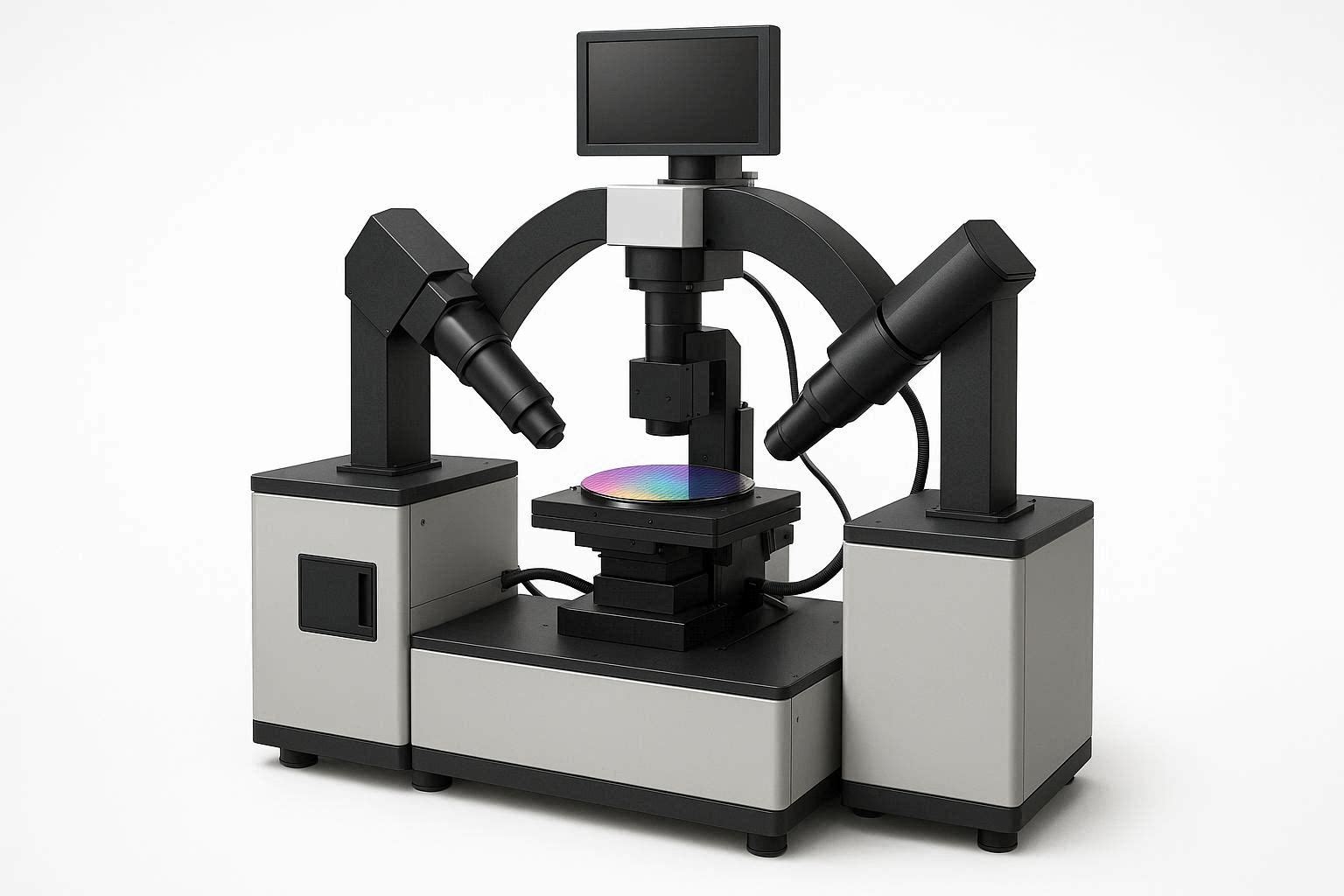
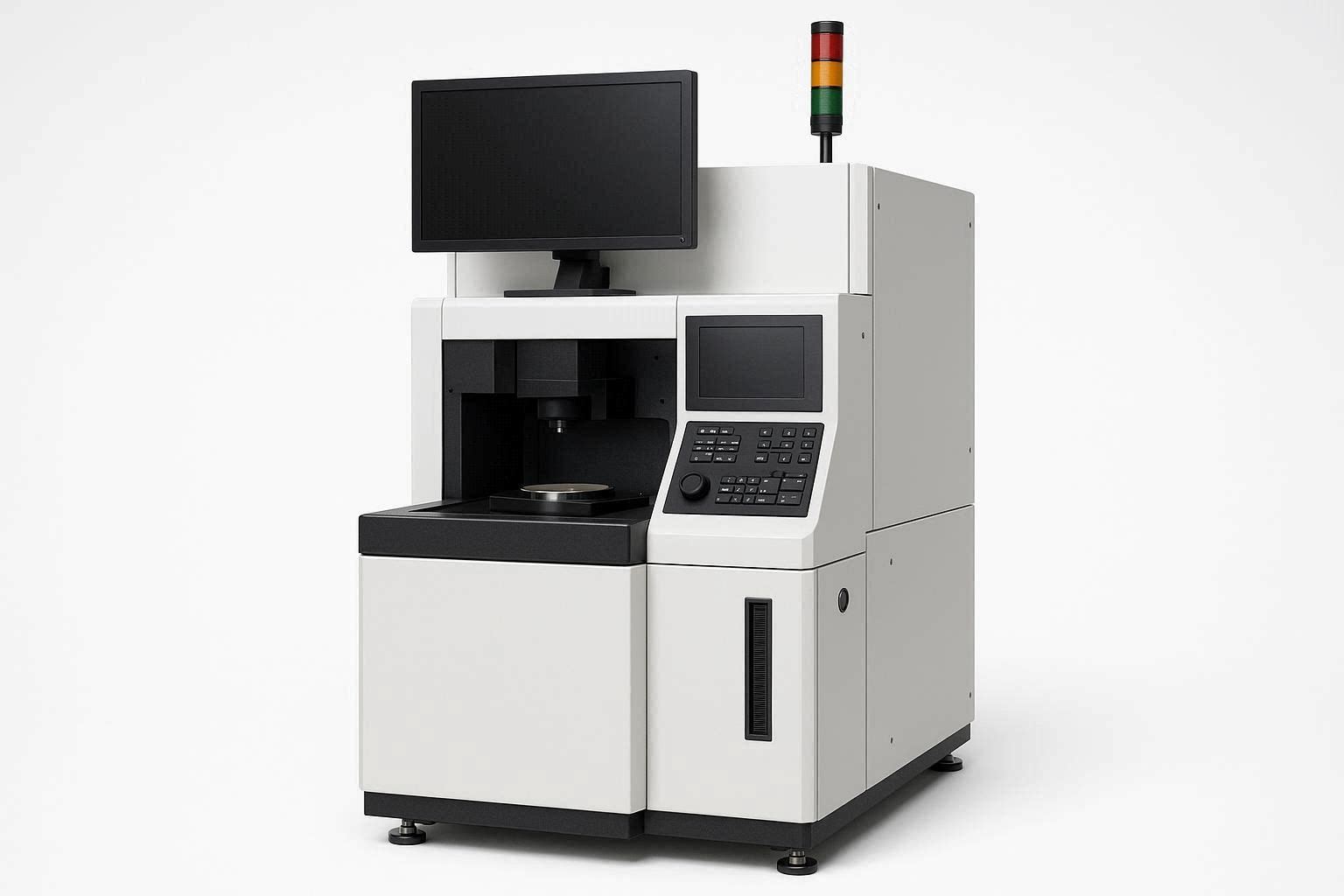
Ellipsometers and Reflectometers are precise optical instruments used to analyze thin films, surface layers, and material properties by measuring reflected light. These tools are essential in industries like semiconductors, coatings, materials science, and nanotechnology for quality control and research.
What is an Ellipsometer?
An Ellipsometer measures the change in polarization as light reflects off a surface, providing detailed information about film thickness, refractive index, and optical properties. It is highly sensitive and capable of characterizing nanometer-scale layers.
Types of Ellipsometers:
- Spectroscopic Ellipsometers: Measure over a range of wavelengths for detailed film analysis
- Null Ellipsometers: Use polarization adjustments to determine film properties without intense calculations
- Rotating Analyzer Ellipsometers: Employ rotating polarizers for dynamic measurements
Applications of Ellipsometers:
- Thin film characterization in semiconductors
- Coatings and optical layer analysis
- Material surface studies
- Quality control in manufacturing
What is a Reflectometer?
A Reflectometer measures the intensity of reflected light from a surface or film to determine properties such as surface roughness, film thickness, or material composition. Reflectometers are versatile and used for quick assessments.
Types of Reflectometers:
- Spectrophotometric Reflectometers: Measure reflectance at various wavelengths
- Laser Reflectometers: Use laser sources for high-precision measurements
- Angle-Resolved Reflectometers: Assess reflectance at different incident angles
Applications of Reflectometers:
- Coating thickness measurement
- Surface cleanliness and defect detection
- Material and film uniformity checks
- Optical component testing
Benefits of Using Ellipsometers & Reflectometers
- High Precision: Nanometer-scale accuracy in film and surface measurements
- Non-Destructive: No damage to samples during testing
- Fast and Reliable: Quick data acquisition for quality control
- Versatile: Suitable for a wide range of materials and surface types
- Research & Development: Essential tools for material science investigations
Key Value Propositions
- Sub-Angstrom Resolution: Delivers ultra-high sensitivity for films ranging from <1 nm to >10 µm, ensuring precise control of critical interface layers.
Non-Destructive Optical Characterization: Measure thickness and optical constants without physical contact, preserving wafer integrity for subsequent processing.
- Complex Multi-Layer Modeling: Advanced regression algorithms and a comprehensive material library enable the characterization of multi-layer stacks (up to 10+ layers) and graded indices.
- High-Throughput Automation: Fully SEMI-compliant 300mm FOUP/EFEM integration with high-speed mapping stages for real-time process excursions detection.
- SECS/GEM Connectivity: Seamless integration into factory MES for automated recipe management, data spooling, and statistical process control (SPC).
Technical Deep-Dive
These systems utilize the change in polarization state (Ellipsometry) or the intensity of reflected light (Reflectometry) to determine material properties.
- Spectroscopic Ellipsometry (SE): Measures the amplitude ratio and phase difference of polarized light. Because it measures a ratio, it is inherently more accurate and less sensitive to light source fluctuations than intensity-based methods.
- Spectroscopic Reflectometry: Measures the intensity of reflected light at normal incidence. Optimized for high-throughput thickness measurements of transparent films and photoresists.
- Light Sources: Utilizes high-stability Xenon arc lamps or Deuterium lamps for DUV coverage, coupled with CCD or InGaAs detectors for high-speed data acquisition.
- Technical Drawings: [Placeholder: Request CAD Previews for EFEM Port or In-Situ Chamber Mounting].
Buyer’s Guide / Decision Logic
Selecting the right metrology tool depends on the complexity of your film stack:
- Reflectometry vs. Ellipsometry: Choose Reflectometry for simple, known single-layer films (like SiO2 or resist) where speed is the priority. Choose Ellipsometry for unknown materials, ultra-thin films (<5 nm), or when you need to solve for both thickness and refractive index simultaneously.
- Spectral Range: For wide-bandgap materials (GaN, SiC) or advanced DUV lithography, a system with Deep UV (190 nm) capability is essential.
- Spot Size: For "in-die" metrology on patterned wafers, ensure the system is equipped with micro-spot optics (<30 µm) to avoid signal interference from surrounding structures.
Technical FAQ
Q: Can the system measure the bandgap of a material?
A: Yes. By analyzing the absorption coefficient derived from the spectroscopic data, the software can accurately calculate the optical bandgap using Tauc plots.
Q: How does the tool handle "Rough" surfaces?
A: Our modeling software includes effective medium approximation (EMA) layers to account for surface roughness, ensuring thickness measurements remain accurate even on non-ideal surfaces.
Q: Is the system compatible with transparent substrates (Glass/Quartz)?
A: Yes. We offer specialized hardware configurations that include backside reflection suppression to eliminate interference from the second surface of transparent substrates.
Q: What is the typical measurement time per point?
A: For standard reflectometry, <0.1 seconds. For high-speed spectroscopic ellipsometry, typically 1 to 3 seconds per point, depending on the spectral resolution and signal-to-noise requirements.
Q: Does it support mapping of TTV (Total Thickness Variation)?
A: Absolutely. The automated mapping software allows for user-defined grids (polar or rectangular) to visualize film uniformity across the entire 200mm or 300mm wafer.
Spectroscopic Ellipsometers & Reflectometers | Thin-Film Metrology
High-precision ellipsometry for 200mm/300mm wafer thin-film analysis. Measure thickness, n & k constants, and bandgap with sub-angstrom repeatability. SEMI compliant.
In the fabrication of gate oxides, high-k dielectrics, and complex optical coatings, nanometric precision in film thickness and refractive index is non-negotiable. Our Spectroscopic Ellipsometers and Reflectometers provide non-destructive, non-contact metrology capable of characterizing single and multi-layer stacks with sub-angstrom repeatability. By leveraging wide-spectrum analysis (Deep UV to NIR), these tools empower R&D and production engineers to monitor film growth, crystallinity, and composition with the absolute accuracy required for next-generation semiconductor nodes.
Interactive Selection Table: System Configurations
| Model No. | Technology | Wavelength Range | Spot Size | Primary Application |
|---|---|---|---|---|
| ER-Nano 200 | Spectroscopic Reflectometer | 200 nm – 1000 nm | 10 µm – 50 µm | Rapid Thickness / PR Check |
| SE-Ultra 300 | Spectroscopic Ellipsometer | 190 nm – 1700 nm | < 30 µm | Advanced Gate Oxide / n & k |
| SE-Mapping Pro | Automated Ellipsometer | DUV to NIR | Variable | 300mm Full-Wafer Mapping |
| SE-InSitu | Vacuum-Mounted SE | UV to VIS | Fixed | Real-time ALD/CVD Monitoring |
Would you like specific product recommendations, technical specifications, or usage applications tailored to your industry?
Order Form
About Semiconductor Electronics
SEMI EL project is a global supplier of materials, equipment, spare parts and supplies for the semiconductor industry.
Get In Touch
Email: info@semi-el.com