
Microscopes
Description
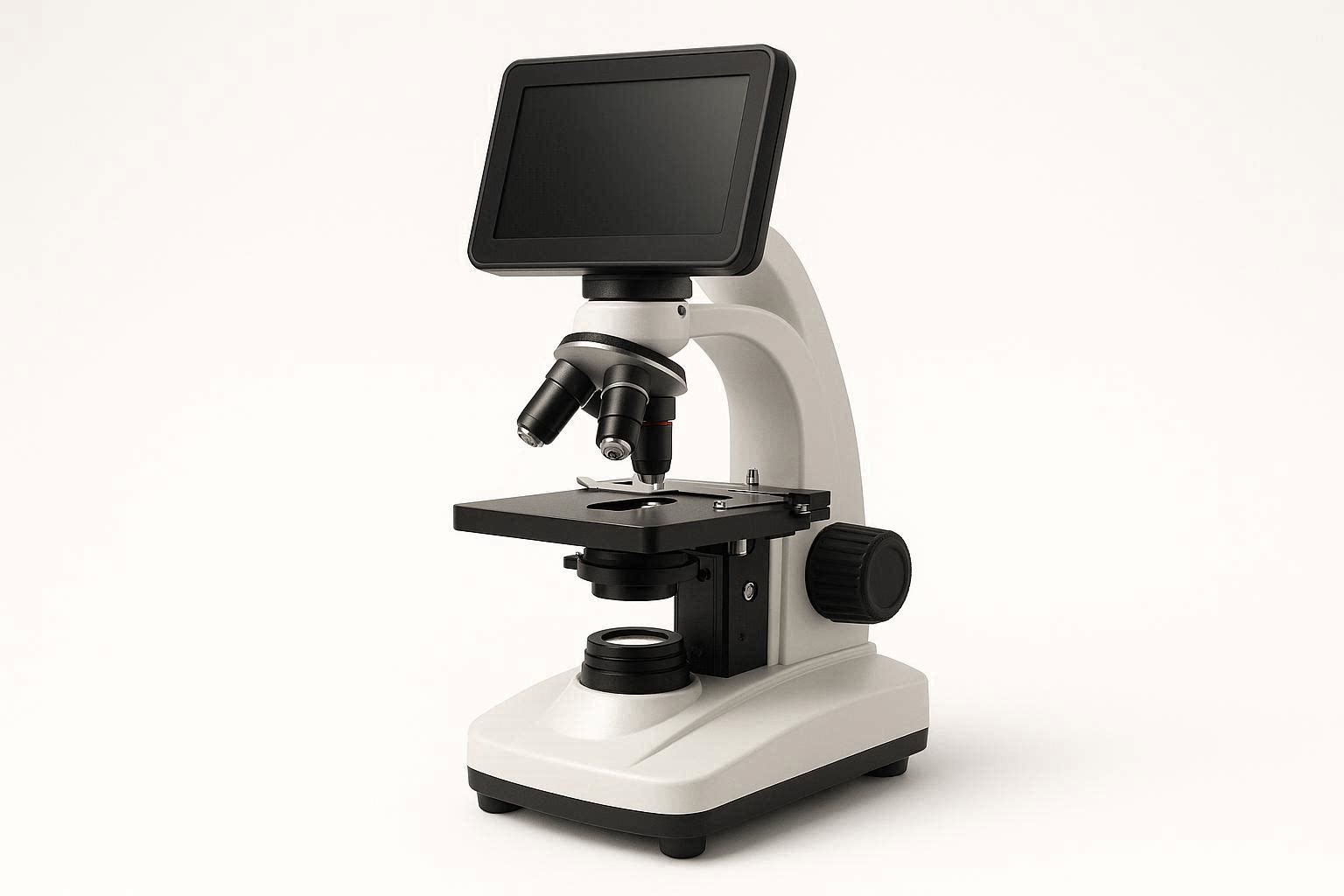
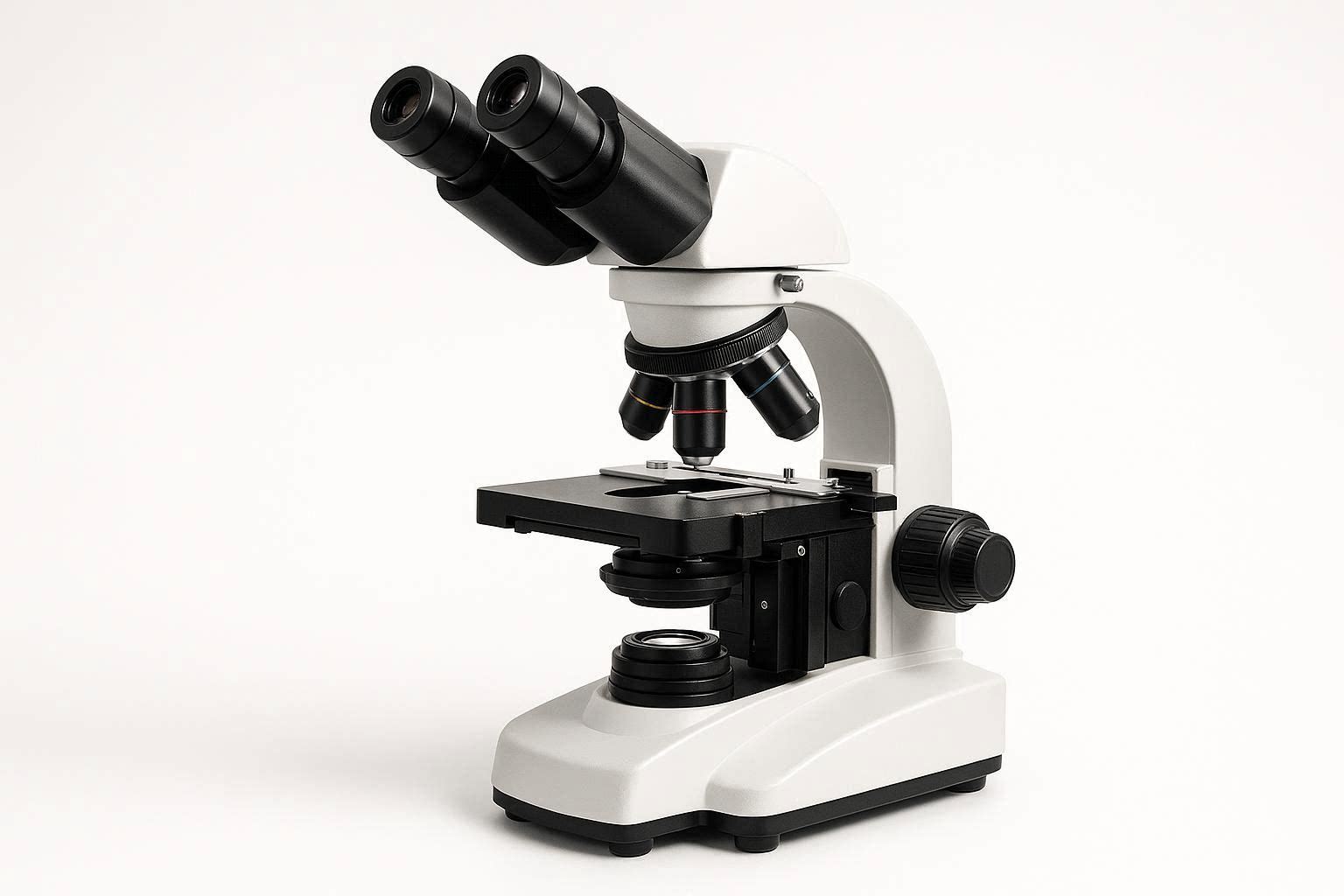
Microscopes are essential tools that enable the visualization of objects and structures too small to be seen with the naked eye. They are widely used in research laboratories, medical diagnostics, education, and industrial inspection.
Types of Microscopes
1. Optical Microscopes
Use visible light and lenses to magnify images. Common types include:
- Compound Microscopes: Ideal for biological specimens, offering high magnification with multiple lenses.
- Stereo Microscopes: Provide a three-dimensional view, suitable for dissection, circuit inspection, and craftsmanship.
- Digital Microscopes: Incorporate digital cameras for image capture and analysis.
2. Electron Microscopes
Use electron beams instead of light for ultra-high magnification and resolution:
- Transmission Electron Microscopes (TEM): Visualize thin samples at atomic resolution.
- Scanning Electron Microscopes (SEM): Provide detailed 3D surface images.
3. Fluorescence Microscopes
Use fluorescence to detect specific components within cells or materials, essential in biomedical research.
Key Features of Modern Microscopes
- High magnification and resolution
- Brightfield, darkfield, phase contrast, or fluorescence imaging options
- Adjustable focus and illumination
- Digital imaging capabilities
- Ergonomic and user-friendly design
Applications of Microscopes
- Biology & Medicine: Cell analysis, tissue examination, microbiology
- Material Science: Surface analysis, defect detection
- Electronics: Inspection of circuit boards and microchips
- Education & Research: Teaching, scientific discovery, quality control
- Industrial Inspection: Precision manufacturing, forensic analysis
Benefits of Using Our Microscopes
- Superior optical clarity and magnification
- Durable and easy-to-operate designs
- Advanced imaging and analysis features
- Wide range of models to suit educational, research, or industrial needs
- Reliable performance for critical applications
Key Value Propositions
- Multi-Modal Contrast Imaging: Switch seamlessly between Brightfield, Darkfield, and DIC (Nomarski) to highlight height differences and surface scratches on multi-layer thin films.
- Ergonomic SEMI-Compliance: Designed with adjustable eyepieces, motor-driven nosepieces, and intuitive software interfaces to meet SEMI S8 ergonomics and S2 safety standards.
- Sub-Micron Measurement Precision: Integrated calibrated metrology software allows for 2D measurements (X, Y, Area) with traceable accuracy for CD (Critical Dimension) verification.
- Cleanroom-Ready Engineering: Low-outgassing materials, antistatic (ESD-safe) coatings, and integrated fan-filter units ensure the system remains ISO Class 1 compatible.
- Seamless Data Integration: Full SECS/GEM support and automated report generation (PDF/HTML) for immediate sharing of defect images with the MES (Manufacturing Execution System).
Technical Deep-Dive
Our inspection platforms utilize apochromatic (APO) optics to ensure zero color fringing, providing the highest fidelity imaging for complex circuitry.
- Illumination Science: High-intensity LED or Xenon light sources with programmable apertures to control depth-of-field and contrast for high-aspect-ratio features.
- Motorized Stages: High-precision X-Y stages with linear encoders provide <1µm repeatability, allowing the system to revisit specific defect coordinates provided by automated inspection tools (KLARF files).
- High-Resolution Sensing: Equipped with global-shutter CMOS sensors (up to 20MP) to capture blur-free images of wafers even during stage movement.
- Technical Drawings: [Placeholder: Request CAD Previews for Integrated EFEM or Desktop Layout].
Buyer’s Guide / Decision Logic
Selecting the right microscope configuration depends on your stage of the process:
- Optical vs. Digital: Use Optical (eyepieces) for real-time failure analysis where depth perception is key; use Digital for high-throughput documentation and 3D profile reconstruction.
- Objective Lens Selection: For deep trench or TSV (Through-Silicon Via) inspection, prioritize "Long Working Distance" (LWD) objectives to prevent collisions with the wafer or probe cards.
- Automation Grade: For HVM production, a "Macro/Micro" combined station is recommended to perform both whole-wafer tiling (Macro) and individual die review (Micro) in a single sequence.
Technical FAQ
Q: How does the system handle wafer mapping?
A: The system software creates a virtual wafer map based on your die dimensions, allowing for "click-to-move" navigation and automated multi-point inspection routines.
Q: Can the microscope measure step heights?
A: While primarily for lateral inspection, our systems equipped with "Z-stacking" or Laser AF (Auto-Focus) can perform 3D surface reconstruction and provide topographical height data.
Q: What is the MTBF for the illumination system?
A: Our industrial LED light sources are rated for >50,000 hours of continuous use, effectively eliminating the frequent downtime associated with traditional halogen bulbs.
Q: Does it support "Darkfield" for particle detection?
A: Yes. Our high-performance Darkfield mode is specifically designed to make sub-micron particles and hairline scratches scatter light against a dark background for easy detection.
Q: Is the system compatible with existing KLARF/defect files?
A: Yes. The software includes a conversion module that imports defect coordinates from major automated inspection tools, automatically driving the stage to the defect locations for review.
Semiconductor Inspection Microscopes | High-Resolution Wafer Defect Analysis
Industrial-grade optical and digital microscopes for 200mm/300mm wafer inspection. Features DIC, darkfield, sub-micron resolution, and SEMI-compliant automation.
In an industry where a single sub-micron particle can compromise an entire reticle, visual verification is the ultimate line of defense in process control. Our Semiconductor Inspection Microscopes are engineered to bridge the gap between high-speed automated defect discovery and detailed failure analysis. By integrating advanced contrast techniques like Differential Interference Contrast (DIC) with high-NA (Numerical Aperture) optics, these systems allow process engineers to visualize topographical variations and contamination that are invisible under standard brightfield illumination.
Interactive Selection Table: System Configurations
| Model No. | Optical System | Max Wafer Size | Resolution / Mag | Primary Application |
|---|---|---|---|---|
| Micro-R&D Pro | Compound Optical | Up to 200mm | 1000x / 0.2µm | Failure Analysis / Lab |
| Digital-Vue 300 | 4K Digital | 300mm | 2500x Digital | 3D Measurement / Documentation |
| Inspec-Auto 300 | Automated Optical | 300mm (FOUP) | 1500x / High-NA | HVM Inline Defect Review |
| Stereo-Fab 80 | Greenough Stereo | N/A (Manual) | 80x / High-Depth | Wire Bond / Packaging Insp. |
Request a Technical Consultation to discuss your defect review requirements or Get a Quote for Custom Configuration.
Order Form
About Semiconductor Electronics
SEMI EL project is a global supplier of materials, equipment, spare parts and supplies for the semiconductor industry.
Get In Touch
Email: info@semi-el.com