
Thermal Evaporators
Description
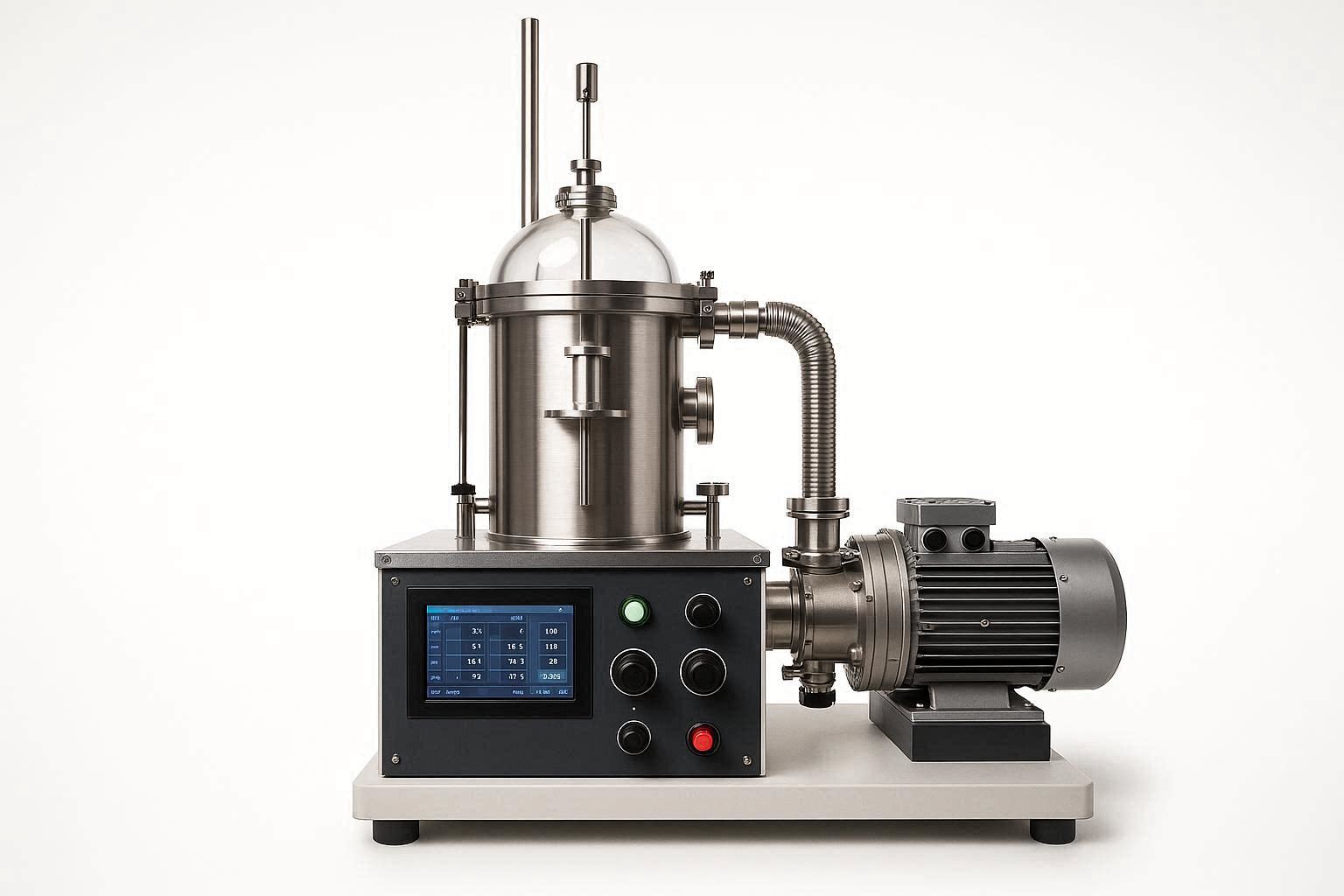
A Thermal Evaporator is a device used in thin film deposition processes to create coatings or films of materials such as metals, oxides, or other substances on various substrates. It works by heating a material until it vaporizes in a high-vacuum environment. The vapor then condenses onto a target surface, forming a uniform thin film.
This method is widely used in research laboratories, electronics manufacturing, optical coatings, and material science for its simplicity, cost-effectiveness, and ability to produce high-purity coatings with precise control over thickness.
How Thermal Evaporator works ?
- The material to be deposited is placed in a crucible or boat inside the evaporator.
- The system is evacuated to a high vacuum to reduce contamination.
- The material is heated, typically using resistive heating, until it vaporizes.
- The vapor travels through the vacuum chamber and condenses onto the substrate, forming a thin film.
Key Features of Thermal Evaporator:
- Compact and Space-Saving Design: Perfect for laboratories with limited space.
- Precise Temperature Control: Adjustable evaporation temperatures for different materials.
- User-Friendly Interface: Easy setup and operation, suitable for both beginners and experienced users.
- Versatile Material Compatibility: Suitable for a wide range of target materials including metals, semiconductors, and oxides.
- High Vacuum System: Ensures high-quality, uniform coatings with minimal contamination.
- Fast Deposition Rates: Efficient evaporation process for quicker results.
Common Applications of Thermal Evaporator:
- Microelectronics Manufacturing: Thin film coatings for semiconductors and circuit components.
- Research & Development: Material science experiments and prototype development.
- Optical Coatings: Manufacturing of mirrors, lenses, and optical filters.
- Solar Cell Fabrication: Depositing active layers for photovoltaic devices.
- Surface Modification: Enhancing surface properties such as conductivity and corrosion resistance.
- Educational Purposes: Teaching thin film deposition techniques in academic settings.
Advantages of Thermal Evaporator:
- Cost-Effective: Lower operational costs compared to other deposition methods.
- High Purity Films: Reduced contamination due to high vacuum environment.
- Simple Operation: Minimal training required to operate efficiently.
- Fast Turnaround: Rapid deposition speeds for quick experimentation.
- Versatility: Suitable for a broad range of materials and substrates.
- Reliable Performance: Durable construction for long-term use in demanding environments.
Our Thermal Evaporators provide an efficient and reliable solution for thin film deposition across various research and industrial applications. Designed for precision and ease of use, these systems are ideal for depositing metals, oxides, and other materials with uniform thickness and high purity.
Upgrade your thin film deposition process with our top-quality Thermal Evaporators. Contact us today to find the perfect system tailored to your research or production needs!
*For more information, please contact us.
Order Form
About Semiconductor Electronics
SEMI EL project is a global supplier of materials, equipment, spare parts and supplies for the semiconductor industry.
Get In Touch
Email: info@semi-el.com