
UV Ozone Cleaners / Plasma Cleaners
Description
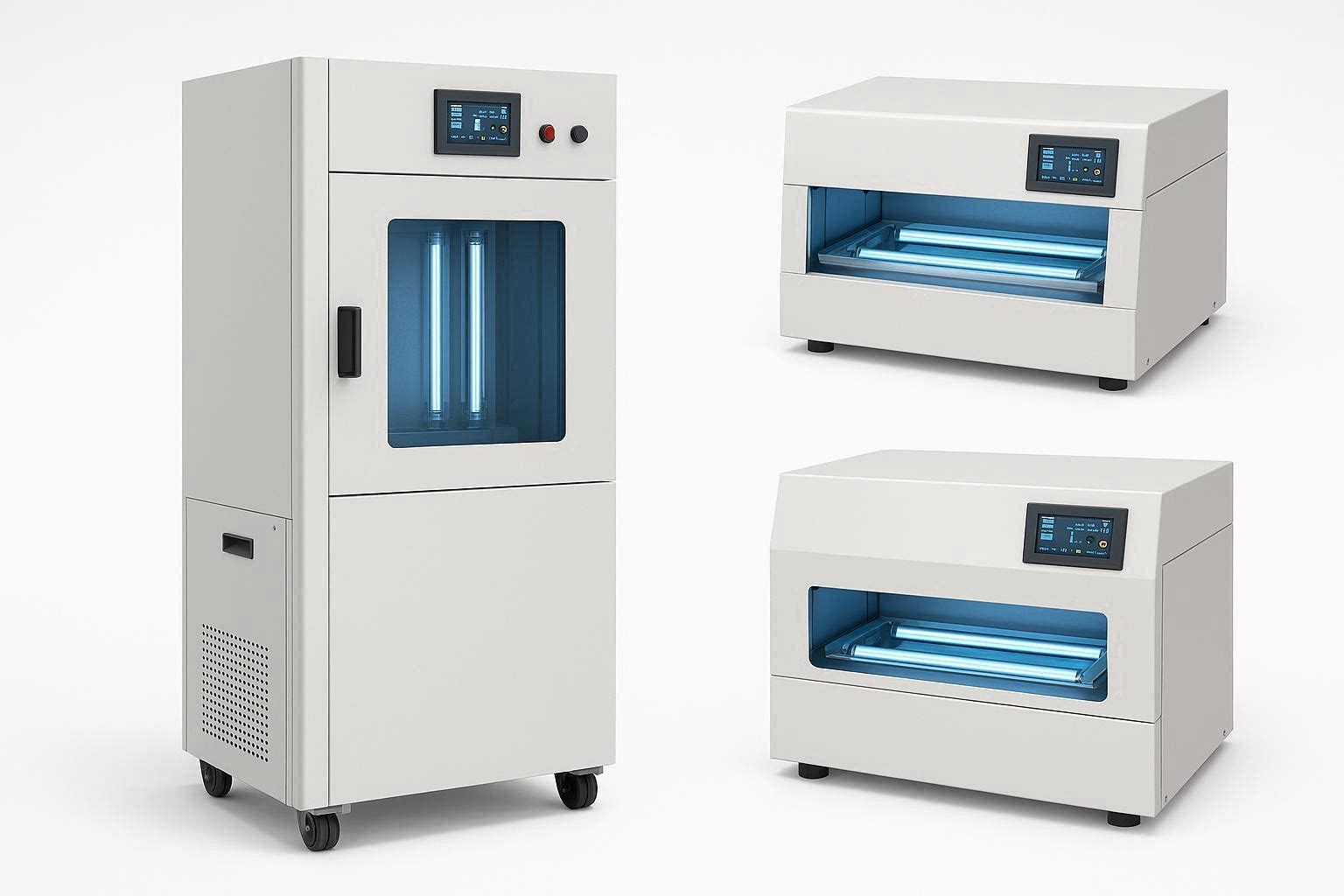
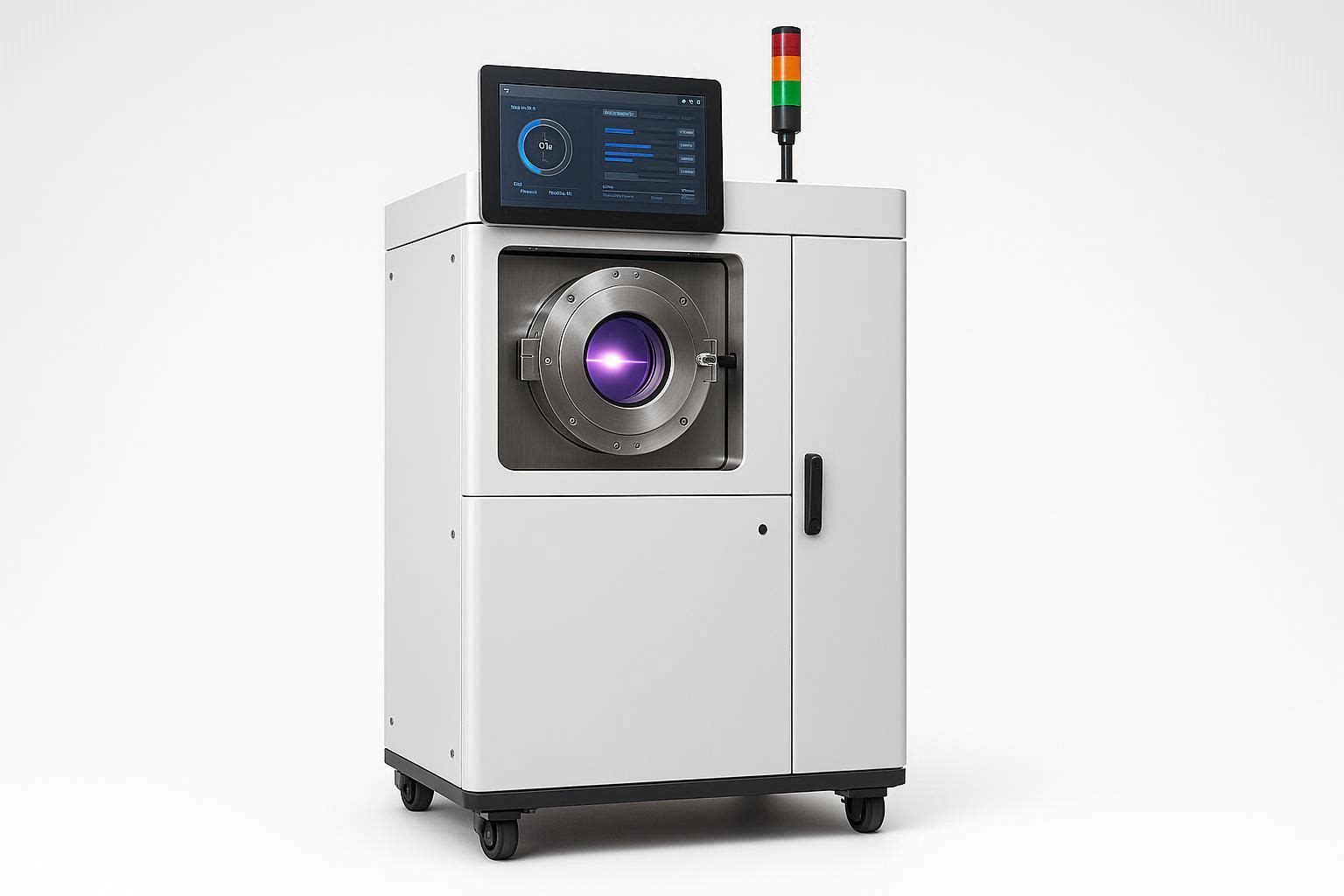
UV Ozone Cleaners and Plasma Cleaners are cutting-edge tools used to remove organic contaminants, improve surface adhesion, sterilize, and prepare materials for further processing. They are widely used in electronics, laboratories, medical device manufacturing, and materials science.
What is a UV Ozone Cleaner?
A UV Ozone Cleaner utilizes ultraviolet (UV) light to generate ozone from ambient oxygen. The ozone then reacts with organic contaminants on surfaces, decomposing them into harmless gases like carbon dioxide and water, effectively cleaning the surface at a molecular level.
Key Features of UV Ozone Cleaners:
- Non-abrasive, chemical-free cleaning
- Effective removal of organic residues, oils, and greases
- Suitable for delicate and sensitive surfaces
- Compact, easy-to-use design
- Often includes timers and safety features
Applications of UV Ozone Cleaners:
- Surface preparation for adhesives and coatings
- Cleaning of optical components, lenses, and glassware
- Removing organic residues from circuit boards
- Sterilization and microbial surface decontamination
- Enhancing surface energy for better bonding
What is a Plasma Cleaner?
A Plasma Cleaner employs ionized gas (plasma) generated by high-voltage electric fields to remove contaminants, activate surfaces, or modify surface properties. Plasma cleaning is highly effective for thorough decontamination, surface activation, and thin film removal.
Key Features of Plasma Cleaners:
- Capable of removing organic and particulate contaminants
- Surface activation for improved adhesion
- Precise control over plasma parameters
- Suitable for complex geometries and delicate materials
- Can operate with various gases (air, argon, oxygen, etc.)
Applications of Plasma Cleaners:
- Surface activation for adhesives and coatings
- Removing organic residues from medical devices
- Preparing semiconductor wafers and electronic components
- Sterilization and microbial decontamination
- Surface modification for hydrophilicity or hydrophobicity
Benefits of UV Ozone & Plasma Cleaning:
- Eco-Friendly: Chemical-free cleaning methods
- Effective & Precise: Removes contaminants without damaging surfaces
- Enhances Surface Properties: Improves adhesion, wettability, and sterilization
- Versatile: Suitable for a wide range of materials and applications
- Cost-Effective: Reduces the need for harsh chemicals and manual cleaning
Why Choose Our UV Ozone & Plasma Cleaners?
Our advanced cleaning systems are designed for reliability, efficiency, and safety. Whether you need gentle surface cleaning or aggressive contaminant removal, we provide tailored solutions to meet your specific industrial or laboratory needs.
Key Value Propositions
- Non-Destructive Atomic Cleaning: Removes organic "adventurous" carbon contaminants at the molecular level without damaging delicate sub-surface lattices or sensitive gate oxides.
- Surface Energy Engineering: Dramatically improves wettability and adhesion for subsequent spinning, coating, or bonding processes (verified by Contact Angle Goniometry).
- UHP Gas Delivery: Equipped with Ultra-High Purity (UHP) mass flow controllers (MFCs) for precise O2, Ar, H2, or CF4 gas mixing, ensuring repeatable plasma chemistry.
- SEMI-Compliant Safety: Features integrated ozone destruct units, interlocked vacuum chambers, and RF shielding to meet rigorous SEMI S2/S8 standards.
Advanced Process Control: PLC-driven interface allows for multi-step recipes, controlling power, pressure, and exposure time with sub-second precision and SECS/GEM logging.
Technical Deep-Dive
- These systems utilize high-energy states to break molecular bonds of organic contaminants (hydrocarbons).
- UV Ozone Physics: High-output synthetic quartz lamps generate 185nm and 254nm wavelengths. The 185nm light creates ozone (O3) from atmospheric oxygen, while the 254nm light breaks the ozone into highly reactive atomic oxygen radicals that oxidize organics into CO2 and H2O.
- Plasma Physics: RF energy ionizes process gases into a low-temperature plasma. Depending on the configuration (Direct vs. Downstream), the system can emphasize physical sputtering or purely chemical radical etching.
- Wafer Handling: Support for up to 300mm wafers with specialized quartz or ceramic trays to eliminate metallic ion cross-contamination.
Technical Drawings: [Placeholder: Request CAD Previews for Vacuum Chamber Dimensions and Cleanroom Footprint].
Buyer’s Guide / Decision Logic
Selecting between UV Ozone and Plasma depends on your substrate's sensitivity:
- Vacuum Sensitivity: UV Ozone cleaners operate at atmospheric pressure, making them ideal for high-throughput cleaning of materials that cannot withstand vacuum cycles.
- Etch Requirements: For "Descum" (removing residual photoresist in trenches), a Vacuum Plasma system is required to provide the directional ion bombardment necessary for high-aspect-ratio features.
- Material Compatibility: Use Oxygen-free Plasma (e.g., Argon or Hydrogen) for sensitive metal layers (like Copper) that are prone to unwanted oxidation during the cleaning process.
Technical FAQ
Q: How does the system ensure zero-trace metallic contamination?
A: Our chambers are constructed from high-purity fused silica (quartz) or hard-anodized aluminum, and all internal components are metal-free to prevent heavy metal poisoning of the wafer.
Q: What is the typical process time for surface activation?
A: Most surface activation steps for wafer bonding are achieved in 30 to 120 seconds, depending on the initial surface state and the required contact angle.
Q: Does the UV Ozone system require external exhaust?
A: Yes. While we include an internal ozone catalyst (destruct unit), an external facility exhaust is mandatory to ensure a safe working environment in compliance with SEMI S2.
Q: Can the Plasma cleaner handle 3D structures?
A: Our "Downstream" or "Indirect" plasma configurations are specifically designed for 3D structures and MEMS, providing isotropic chemical cleaning without the risk of directional ion damage.
Q: Is the RF generator auto-matching?
A: Yes. All plasma systems feature high-speed automatic impedance matching networks to ensure stable plasma density even as gas compositions change during a recipe.
UV Ozone & Plasma Cleaners | Semiconductor Surface Activation Systems
High-performance UV Ozone and Plasma cleaners for wafer bonding, descum, and surface activation. Achieve ultra-low carbon contamination and ISO Class 1 compatibility.
At advanced nodes, the presence of even a single monolayer of organic contamination can lead to catastrophic adhesion failure and device instability. Our UV Ozone and Plasma Cleaning Systems provide the critical surface preparation required for high-reliability wafer bonding, thin-film deposition, and photoresist descum. By utilizing high-energy radical chemistry, these tools transform hydrophobic surfaces into high-energy hydrophilic states, ensuring the structural and electrical integrity of your most sensitive semiconductor architectures.
Interactive Selection Table: System Configurations
| Model No. | Technology | Plasma Source / Lamp | Process Environment | Primary Application |
|---|---|---|---|---|
| UVC-200 Gen | UV Ozone | High-Intensity Hg | Atmospheric | Organic Removal / AFM Tips |
| PC-Nano Desk | Plasma (PE) | RF (13.56 MHz) | Vacuum | R&D / Surface Activation |
| PC-Auto 300 | Plasma (RIE) | High-Density ICP | Vacuum (Auto-Load) | 300mm Descum / Yield Ops |
| Hybrid Clean | UV + Plasma | Dual Source | Multistage | Advanced Packaging / MEMS |
Request a Technical Consultation to discuss your surface tension requirements or Get a Quote for Custom Configuration.
Order Form
About Semiconductor Electronics
SEMI EL project is a global supplier of materials, equipment, spare parts and supplies for the semiconductor industry.
Get In Touch
Email: info@semi-el.com