
Wafer Dicers / Wafer Scribers
Description
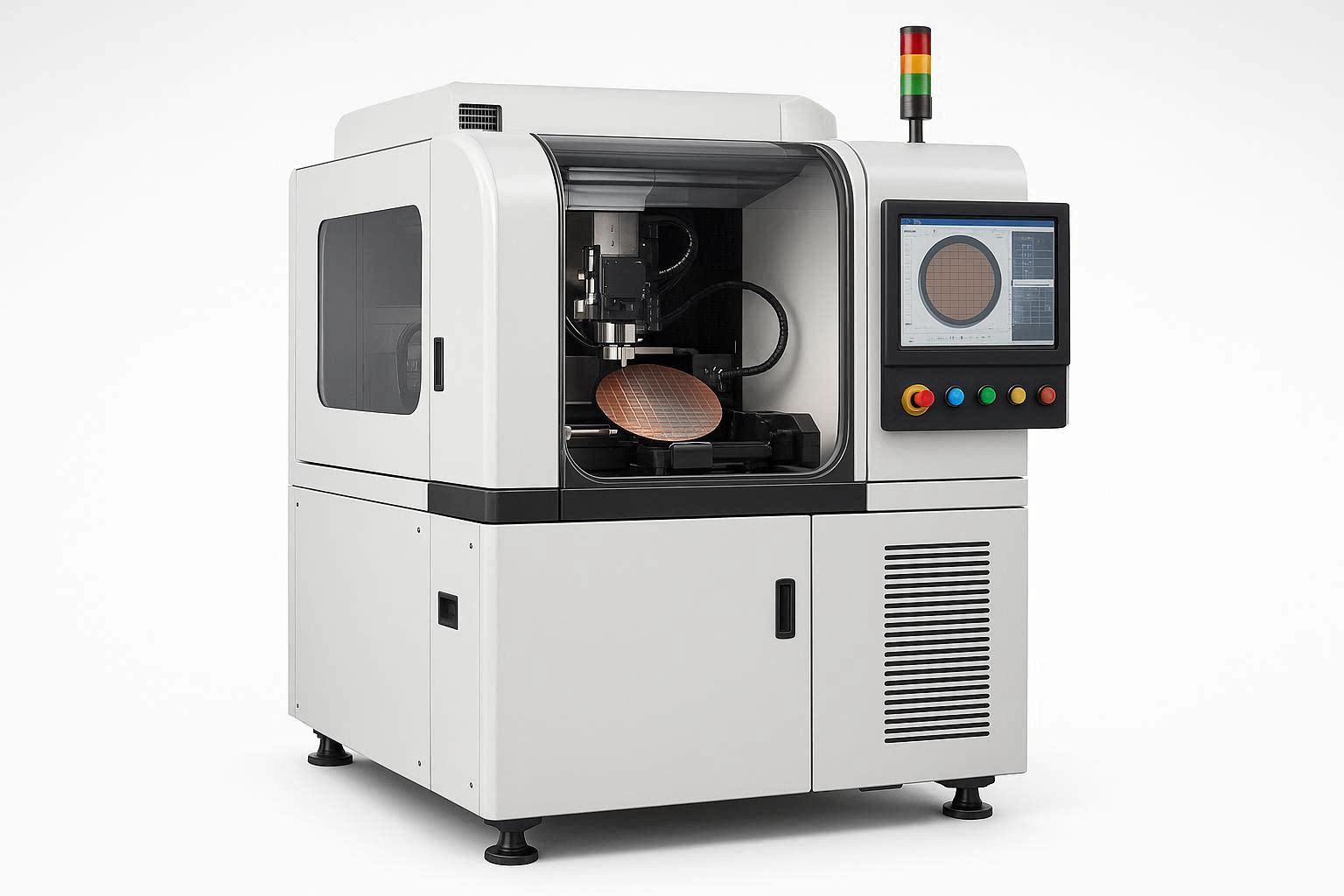
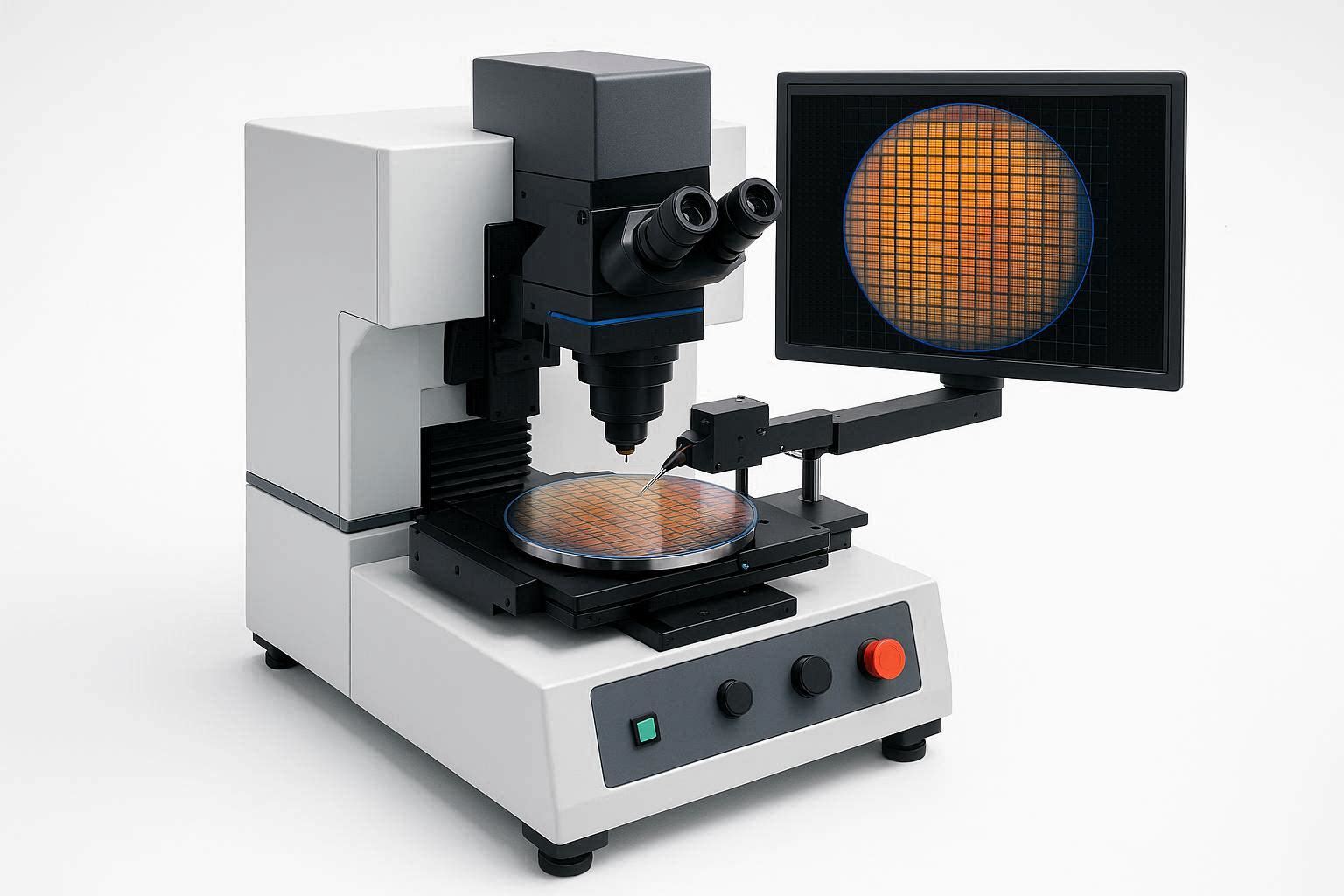
Wafer Dicers and Wafer Scribers are essential tools in the semiconductor and microelectronics industries, used for precisely cutting and scribing wafers into individual chips or components. They ensure high accuracy and minimal damage during the dicing process, critical for maintaining chip performance and yield.
What is a Wafer Dicer?
A Wafer Dicer is a specialized machine that slices silicon wafers into multiple individual microchips or dies with high precision. Modern wafer dicers employ advanced blade or laser technology to achieve clean, accurate cuts with minimal stress on the wafers.
Key Features of Wafer Dicers:
- High-precision slicing with diamond blades or laser beams
- Adjustable cutting parameters for various wafer types
- Automated or semi-automated operation for efficiency
- Minimal kerf loss and wafer stress
- Capable of handling different wafer sizes and materials
Applications of Wafer Dicers:
- Semiconductor wafer singulation
- MEMS device fabrication
- LED and optoelectronic component production
- MEMS and sensor manufacturing
What is a Wafer Scriber?
A Wafer Scriber is a tool or machine used to create a controlled, shallow groove or score on the wafer surface, preparing it for dicing. Wafer Scribers are often used for pre-scoring before the actual cutting process, reducing stress and improving the quality of the final cut.
Types of Wafer Scribers:
- Mechanical scribers
- Laser scribers
- Ultrasonic scribers
Applications of Wafer Scribers:
- Pre-scoring of wafers for easier dicing
- Delicate or thin wafers requiring minimal force
- Creating guide marks for automated dicing
Benefits of Using Wafer Dicers & Wafer Scribers
- High Precision: Ensures accurate die separation with tight tolerances
- Reduced Damage: Minimizes chipping, cracking, or warping
- Efficiency: Automates the dicing process for high throughput
- Versatility: Accommodates various wafer sizes, materials, and thicknesses
- Enhanced Yield: Improves overall chip quality and yield
Key Value Propositions
- Sub-Micron Kerf Consistency: High-frequency air-bearing spindles and precision motion stages ensure kerf width deviation of less than ±1.0 µm across the entire 300mm stroke.
- Chipping & Stress Mitigation: Advanced "Stealth Scribing" and cooling-water CO2 injection technologies significantly reduce Total Thickness Variation (TTV) and backside chipping.
- High-Density UPH (Units Per Hour): Dual-spindle configurations allow for simultaneous X-Y dicing or "Dual-Cut" modes, doubling throughput compared to conventional single-spindle units.
- SEMI-Compliant Automation: Fully integrated with EFEM (Equipment Front End Module) and dual FOUP loaders, certified for ISO Class 5 cleanroom environments.
- Blade & Process Analytics: Real-time monitoring of spindle load, blade wear, and cutting resistance with automated "Contact-less" blade height measurement.
Technical Deep-Dive
Our dicing platforms are engineered to handle the thermal and mechanical stresses of high-speed material removal.
- Spindle Technology: Utilize vibration-free air-bearing spindles with programmable speeds up to 100,000 RPM, optimized for diamond-grit hub and hubless blades.
- Laser Scribing Optics: For ultra-thin wafers (<50 µm), our laser modules utilize a cold-ablation process that creates a precise "V-shape" scribe line without inducing thermal cracks or heat-affected zones (HAZ).
- Vision & Alignment: Dual-magnification CCD cameras with IR (Infrared) capability allow for alignment through opaque layers or on wafers with thick polyimide coatings.
- Technical Drawings: [Placeholder: Request CAD Previews for Inline Dicing/Cleaning/Sorting Integration].
Buyer’s Guide / Decision Logic
Selecting a singulation strategy depends on your material stack and thickness:
- Mechanical Saw vs. Laser: Use mechanical dicing for standard Si wafers >100 µm for cost-efficiency; choose Laser Scribing for brittle materials (GaAs, Sapphire) or ultra-thin wafers to avoid mechanical breakage.
- Blade Selection: Match the diamond grit size and bond type (resin, metal, or vitrified) to your specific metallization layer to prevent top-side burrs.
- Low-k Challenges: For advanced nodes with low-k dielectrics, use a "Laser Grooving" step prior to mechanical dicing to prevent delamination of the interlayer dielectric (ILD).
Technical FAQ
Q: How does the system handle "Dirty" dicing environments?
A: The system includes a high-flow DI water curtain and an atomizing cleaning nozzle to continuously flush silicon "saw dust" (swarf) away from the die surface, preventing contamination.
Q: What is the typical life expectancy of a dicing blade?
A: Depending on the material and feed speed, a standard hubless diamond blade lasts for 500–1,500 meters of cutting. The system tracks this via an automated "Blade Management" log.
Q: Does the system support SECS/GEM?
A: Yes. All automated models are equipped with SEMI E5/E30 compliant interfaces for remote start/stop, recipe upload, and real-time OEE reporting.
Q: Can the tool dice wafers mounted on dicing tape/frames?
A: Absolutely. Our vacuum chucks are designed to handle all standard SEMI-spec dicing frames and tapes, with automated tape-cut detection.
Q: Is there a "Broken Blade" detection system?
A: Yes. High-speed sensors monitor the spindle harmonics and optical sensors check the blade profile after every X-axis pass to ensure 100% process integrity.
Precision Wafer Dicing & Scribing Systems | High-Throughput Die Singulation
Advanced wafer dicing saws and laser scribing systems for 200mm/300mm wafers. Sub-micron kerf control, SEMI S2/S8 compliant, and optimized for MEMS, CMOS, and Power Semi.
As wafers become thinner and die sizes shrink, the singulation process becomes a critical bottleneck where yield can be won or lost. Our Wafer Dicing and Scribing Systems provide the mechanical precision and laser accuracy required to minimize Kerf Loss and eliminate backside chipping in fragile substrates. Whether processing standard Silicon, GaN-on-Si, or sensitive MEMS devices, these tools deliver the high-speed throughput and "Low-Stress" cutting profiles essential for modern high-density packaging.
Interactive Selection Table: System Configurations
| Model No. | Singulation Method | Wafer Size | Spindle/Laser Power | Primary Application |
|---|---|---|---|---|
| DS-Precision 200 | Mechanical Saw | Up to 200mm | 1.2 kW / 60k RPM | Discrete Semi / Analog |
| DS-Ultra 300 | Dual Spindle Saw | 200mm/300mm | 2.2 kW / 80k RPM | High-Volume CMOS / Logic |
| LS-Nano Scribe | UV / Green Laser | Up to 300mm | Ultra-Short Pulse | Thin Wafer / LED / GaN |
| DS-Hybrid X | Saw + Laser | 300mm | Multi-Mode | Low-k Dielectric / Power |
Would you like information on specific models, technical specifications, or tailored solutions for your semiconductor production process?
Order Form
About Semiconductor Electronics
SEMI EL project is a global supplier of materials, equipment, spare parts and supplies for the semiconductor industry.
Get In Touch
Email: info@semi-el.com