
Wire Bonder
Description
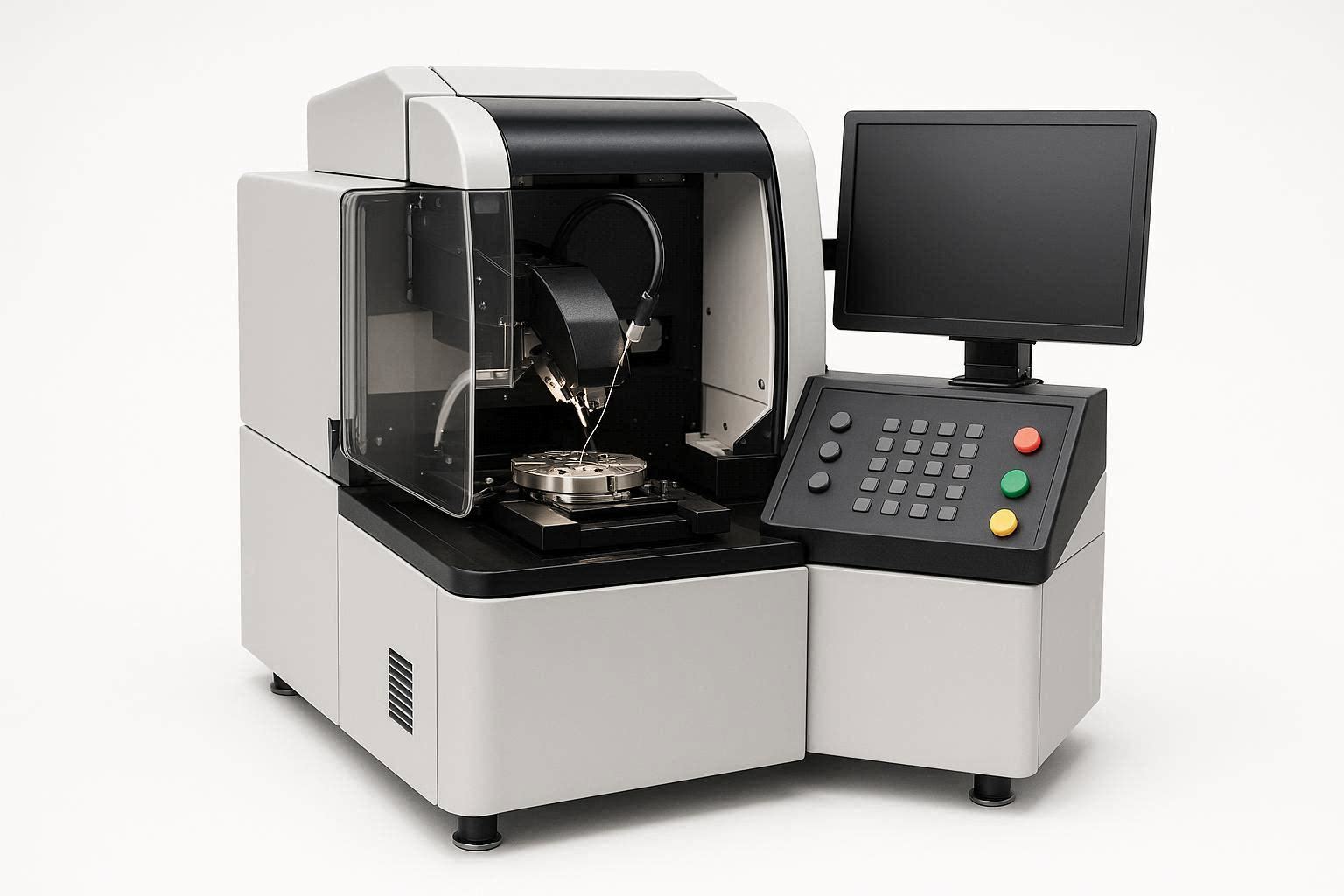
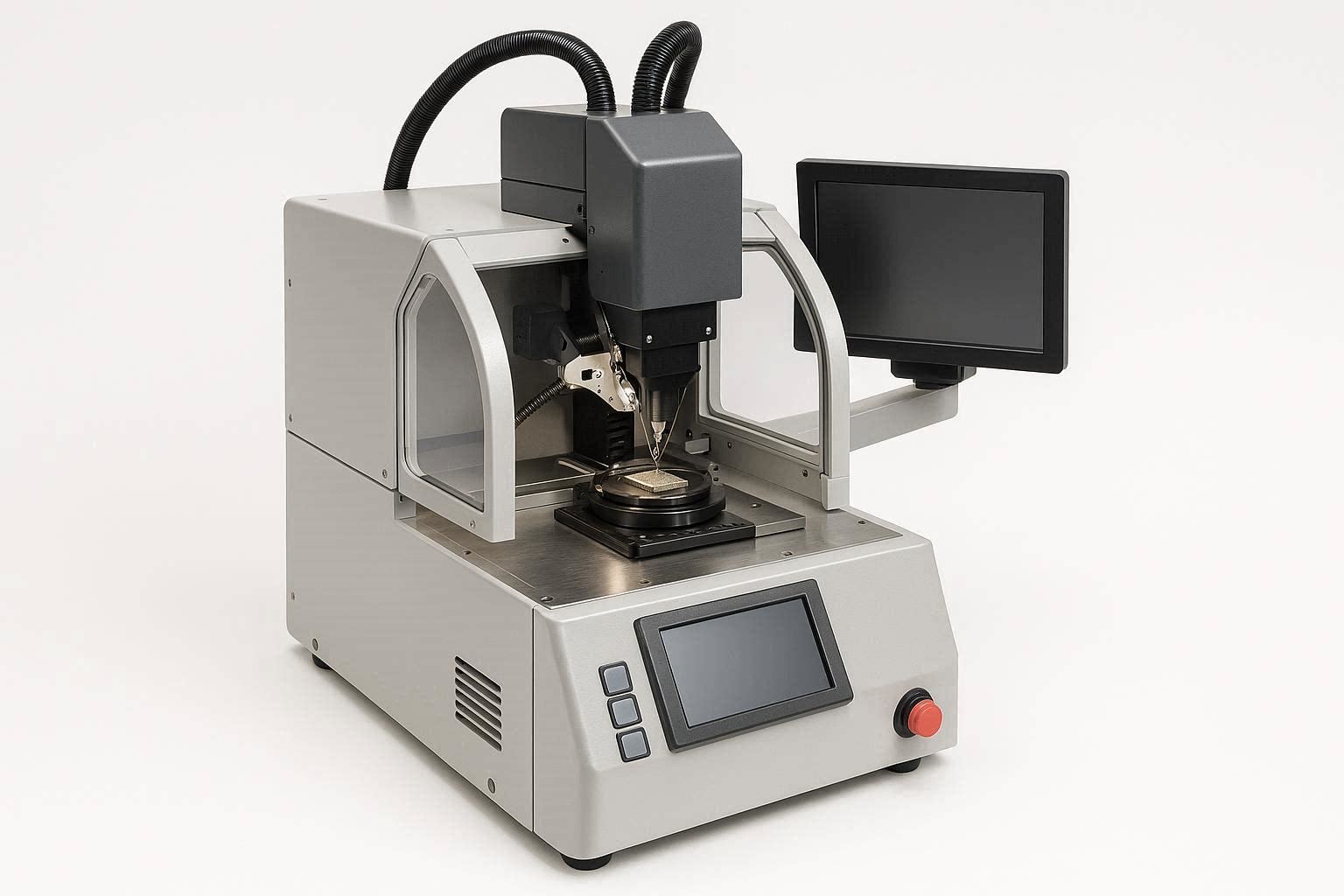
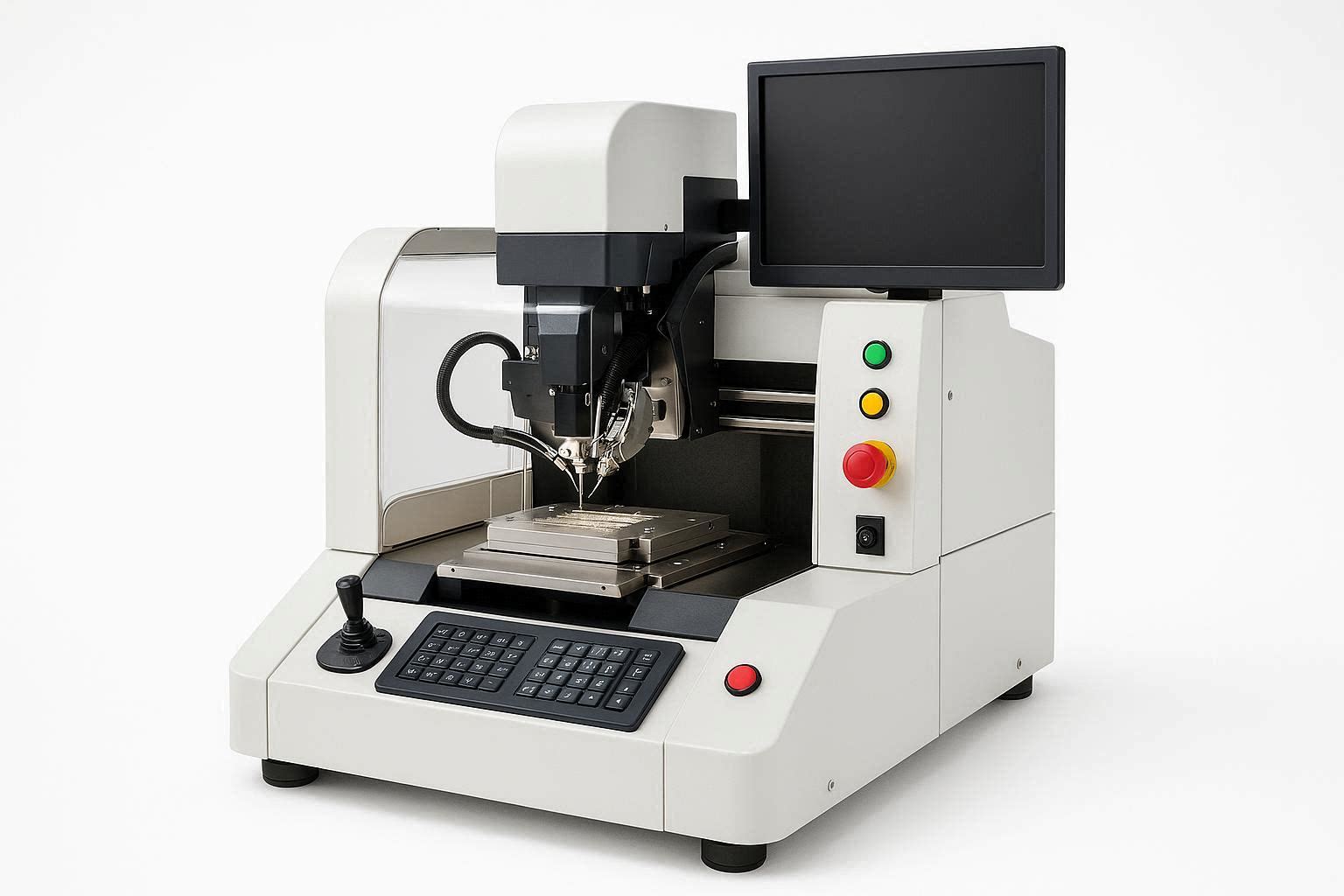
A Wire Bonder is a specialized machine used in the semiconductor, microelectronics, and electronic component industries to create reliable electrical connections through wire bonding. It plays a crucial role in packaging integrated circuits, memory devices, and other electronic components.
What is a Wire Bonder?
A Wire Bonder automates the process of bonding thin wire (usually gold, aluminum, or copper) between a semiconductor chip and its package or substrate. This process ensures electrical connectivity and mechanical stability necessary for device operation.
Types of Wire Bonders:
- Ball Bonding: Uses a spherical tip (ball) to make initial contact.
- Wedge Bonding: Employs a wedge-shaped tool for bonding, suitable for fine pitch and high-density applications.
- Stud Bonders: For larger wire loops and heavier wire applications.
How it works:
- The wire is fed from a spool.
- The bonding tool (capillary or wedge) makes precise contact with the pad.
- A combination of ultrasonic energy, heat, and pressure creates a strong, reliable bond.
- The wire is then looped and bonded to the next point, completing the interconnection.
Key Features of Wire Bonders:
- High Precision & Accuracy: Micron-level positioning for tiny bond pads.
- Versatile Compatibility: Works with various wire materials and sizes.
- Automated Operation: Ensures consistent, high-volume bonding.
- Adjustable Parameters: Customizable bonding force, ultrasonic energy, and temperature.
- User-Friendly Interface: Software for process control and monitoring.
Common Applications of Wire Bonders:
- Semiconductor Device Packaging: Connecting silicon chips to package leads.
- MEMS and Microelectronics: Creating micro-scale electrical connections.
- LED and Optical Device Assembly: Establishing reliable electrical contacts.
- Research & Development: Prototyping and testing new bonding techniques.
Advantages of Wire Bonders:
- Reliable & Durable Bonds: Ensures long-term device performance.
- High Throughput: Suitable for mass production environments.
- Minimal Damage: Gentle bonding process preserves device integrity.
- Flexible Operation: Compatible with different wire types and configurations.
Key Value Propositions of Wire Bonders
- Superior Loop Control: Advanced software-driven trajectory mapping allows for ultra-low profile loops and multi-tier wire architectures without sagging or shorting.
- Real-Time Quality Monitoring: Integrated Bond Process Monitoring (BPM) analyzes ultrasonic impedance and deformation in real-time, automatically flagging non-conforming bonds.
- Sub-Micron Placement Accuracy: High-resolution vision systems and linear motor stages ensure wire placement repeatability within ±2.0 µm at 3-sigma.
- ISO Class 5 Compatibility: Engineered for cleanroom operation with low-particulate motion systems and ESD-safe contact surfaces for sensitive CMOS sensors.
- Minimal Cost of Ownership (COO): High-reliability capillary/wedge designs and optimized material handling sequences minimize downtime and maximize yield per square meter of fab floor.
Technical Deep-Dive
- The system utilizes a high-frequency transducer (typically 60kHz to 130kHz) to deliver precise ultrasonic energy, enabling low-temperature bonding that protects sensitive active areas.
- Wire Compatibility: Supports Gold (Au), Silver (Ag), Copper (Cu), and Palladium-coated Copper (PCC) wires ranging from 12.5 µm to 75 µm (and up to 500 µm for heavy-wire applications).
- Vision System: Dual-magnification optics with AI-driven pattern recognition for rapid die-attach and leadframe registration, even on low-contrast substrates.
- EFO (Electronic Flame-Off): Precision spark control for consistent Free Air Ball (FAB) formation, ensuring uniform ball diameters and consistent neck strength.
- Technical Drawings: [Placeholder: Request CAD Previews for Inline Integration with Die-Attach and Encapsulation lines].
Buyer’s Guide / Decision Logic
- Selecting the optimal bonding platform requires an analysis of your interconnect strategy:
- Pitch & Density: For pitches below 40 µm, a high-frequency (130kHz+) Ball Bonder is essential to achieve the necessary ball-size-to-pad ratio.
- Thermal Budget: If the substrate is heat-sensitive (e.g., certain MEMS or flex-circuits), prioritize Wedge Bonding, which can often be performed at lower temperatures or ambient.
- Automation Level: Stand-alone units are ideal for failure analysis, but high-volume production requires inline systems with automated magazine handlers and SEMI-standard material flow.
Technical FAQ
Q: How does the system handle Copper (Cu) wire bonding to prevent oxidation?
A: All Cu-ready models include a programmable forming gas (N2/H2) delivery system that shrouds the EFO zone and the bonding area to ensure clean, oxide-free ball formation.
Q: What is the Mean Time to Repair (MTTR) for the transducer and capillary?
A: The capillary can be swapped and recalibrated in under 3 minutes. The modular transducer assembly is designed for field replacement in less than 30 minutes to minimize line stoppages.
Q: Is the system compatible with SECS/GEM for Industry 4.0 integration?
A: Yes. The system supports full E5/E30 protocol implementation for remote recipe management, OEE tracking, and automated data logging for traceability.
Q: Can the tool perform "Stitch Bonding" for complex interconnects?
A: Yes, our hybrid firmware supports multi-stitch paths and security bond sequences (like BSOB - Ball Stitch on Ball) for increased mechanical stability in SiP modules.
Q: What is the typical installation time for an inline system?
A: Standard installation, including facility hook-up (CDA, Vacuum, Power) and baseline process qualification, typically takes 3 to 5 business days.
High-Speed Automatic Wire Bonders | SEMI-Compliant Microelectronic Assembly
Precision gold and aluminum wire bonding systems for IC, MEMS, and Power Semi packaging. Features ultra-fine pitch capability, high-throughput automation, and SECS/GEM support.
As device architectures transition to higher I/O densities and thinner form factors, the structural integrity of interconnects remains the ultimate guarantor of reliability. Our Automatic Wire Bonders deliver the industry’s most stable ultrasonic energy transfer and looping control, designed to meet the rigorous demands of advanced Leadframe and Ball Grid Array (BGA) packaging. By integrating real-time bond quality monitoring with high-speed X-Y-Z motion systems, we solve the dual challenges of ultra-fine pitch accuracy and maximum UPH (Units Per Hour) in high-volume assembly.
Interactive Selection Table: System Configurations
Elevate your microelectronics manufacturing with our advanced Wire Bonder solutions. Contact us today for more information or a customized bonding system tailored to your production needs!
Order Form
About Semiconductor Electronics
SEMI EL project is a global supplier of materials, equipment, spare parts and supplies for the semiconductor industry.
Get In Touch
Email: info@semi-el.com